Introduction: Understanding the Importance of Gentle Stretches for RA
Rheumatoid arthritis (RA) is a chronic autoimmune condition that causes inflammation and pain in the joints, making movement difficult, especially in the morning. Stiffness and discomfort can often make getting out of bed a challenging task. However, incorporating gentle morning stretches into your routine can significantly help reduce morning stiffness, improve flexibility, and maintain joint health.
This guide will provide you with essential stretches, safety tips, and practical advice to help you start your day with ease. A consistent and gentle stretching routine can lead to better joint mobility, reduced pain levels, and overall improved well-being.
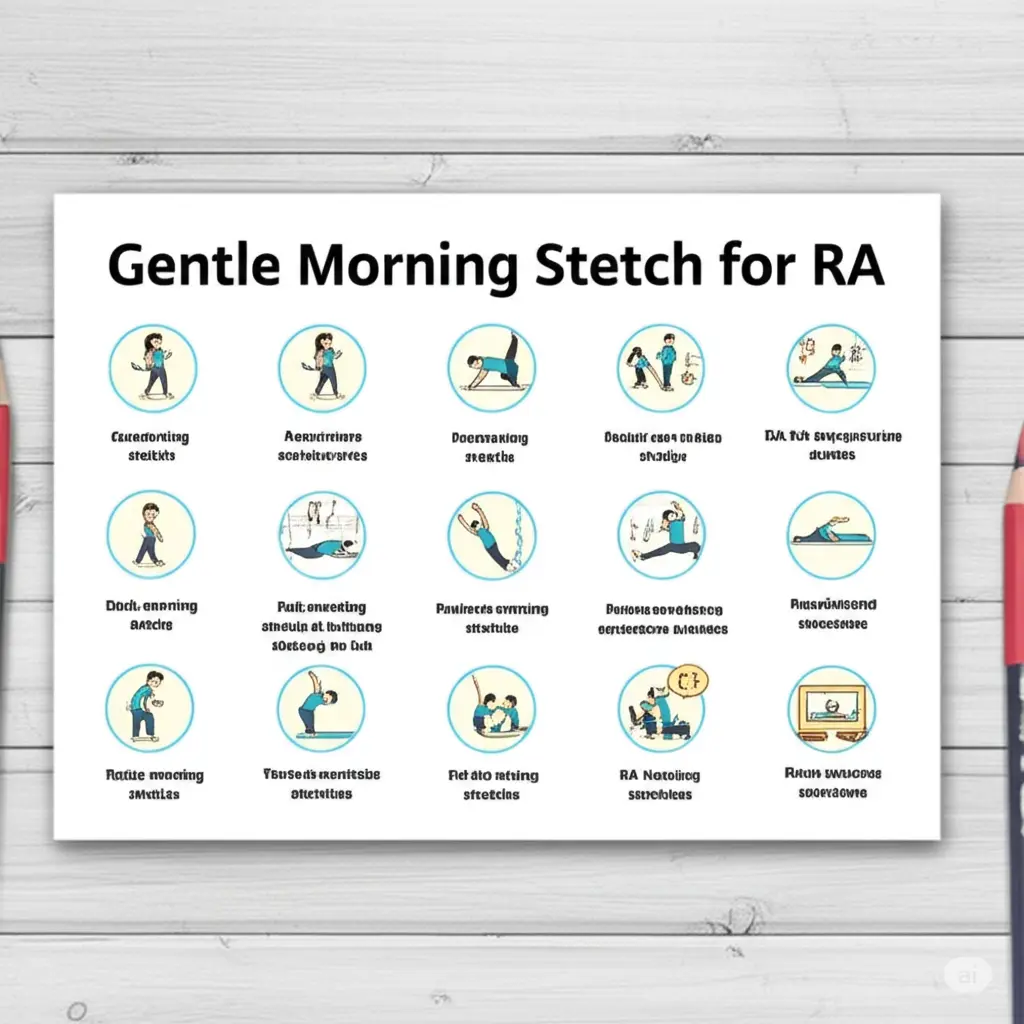
Key Takeaways:
- Printable Guide for easy access to daily stretches.
- Essential Stretches for the upper body, core, back, and lower body.
- Safety Guidelines to ensure stretches are performed without injury.
- Implementation Strategies to help build and maintain a sustainable stretching habit.
- Progress Tracking to monitor improvements in mobility and comfort.
Why Morning Stretches Matter for RA Patients
Rheumatoid arthritis affects multiple joints, leading to inflammation, pain, and stiffness. This can be especially problematic in the morning after long periods of inactivity during sleep. Gentle stretching is one of the most effective ways to alleviate these symptoms.
The primary benefits of morning stretches for RA include:
- Reduced Morning Stiffness – Stretching can help loosen stiff joints and muscles, making it easier to move.
- Pain Relief – Gentle movements stimulate circulation and may reduce discomfort caused by inflammation.
- Improved Flexibility – Regular stretching can help maintain or even improve your range of motion, making everyday tasks more manageable.
- Prevention of Deformities – Stretching helps maintain joint mobility, potentially preventing the development of joint deformities that are common with untreated or poorly managed RA.
Essential Morning Stretches for RA: A Step-by-Step Guide
1. Upper Body Stretches
A. Shoulder Rolls:
- Proper Form: Start with your shoulders relaxed. Slowly raise your shoulders toward your ears in a circular motion, creating small circles. Reverse the direction after a few repetitions.
- Key Tips: Begin with small, gentle movements. Don’t rush, and focus on keeping your movements fluid and relaxed.
- Repeat: Perform 5 repetitions in both directions.
B. Arm Circles:
- Proper Form: Extend both arms straight out to the sides. Slowly make small circles with your arms, focusing on smooth movements. Reverse the direction after a few repetitions.
- Key Tips: Keep your arms extended and avoid straining your shoulders. If you feel any discomfort, reduce the size of the circles.
- Repeat: Perform 5 repetitions in each direction.
C. Wrist Flexion and Extension:
- Proper Form: Extend your arm straight in front of you with your palm facing upwards. Gently bend your wrist back, then forward, holding each position for a few seconds.
- Key Tips: Perform this stretch slowly, ensuring no jerking or sudden movements. Keep your arm supported if needed.
- Repeat: Perform 5 repetitions per hand.
2. Core and Back Stretches
A. Gentle Twists:
- Proper Form: Sit upright on a chair with your feet flat on the ground. Place your hands on your shoulders. Slowly rotate your upper body to one side, keeping your hips and lower body stationary. Return to the center and rotate to the other side.
- Key Tips: Perform these twists gently without forcing the movement. Keep your back straight and avoid over-rotating.
- Repeat: Perform 3-5 repetitions on each side.
B. Side Stretches:
- Proper Form: Stand with your feet shoulder-width apart and reach one arm overhead. Lean to the opposite side, feeling a gentle stretch along the side of your torso. Hold the stretch for a few seconds, then return to the center.
- Key Tips: Focus on keeping your torso aligned and avoid bending forward or backward.
- Repeat: Perform 3 repetitions on each side.
C. Cat-Cow Stretch:
- Proper Form: Start on all fours with your hands under your shoulders and knees under your hips. Inhale and arch your back, lifting your head and tailbone (Cow). Exhale, rounding your back and tucking your chin toward your chest (Cat).
- Key Tips: Perform these movements slowly, focusing on controlled breathing.
- Repeat: Complete 5 cycles of Cat-Cow.
3. Lower Body Stretches
A. Ankle Circles:
- Proper Form: Sit comfortably on a chair or bed with your feet flat on the floor. Lift one leg and gently rotate your ankle in small circles. Change directions after a few seconds.
- Key Tips: Keep the movements slow and deliberate, and avoid any sharp movements.
- Repeat: Perform 5 repetitions in both directions for each ankle.
B. Knee Lifts:
- Proper Form: Stand with support if needed. Slowly lift one knee toward your chest, then lower it back to the ground. Keep the movement slow and controlled.
- Key Tips: Ensure that the movement is gentle, focusing on the range of motion that is comfortable for you.
- Repeat: Perform 5 repetitions on each leg.
C. Standing Hamstring Stretch:
- Proper Form: Stand tall and extend one leg out in front of you with your heel on the ground. Bend at the hips and slowly lower your upper body toward the extended leg, feeling a stretch along the back of your thigh.
- Key Tips: Keep your back straight and bend forward at the hips, not the lower back.
- Repeat: Hold the stretch for 10-20 seconds on each leg.
Safety Guidelines for Stretching with RA
While stretching can be incredibly beneficial, it’s crucial to maintain safety to avoid injury, especially when dealing with the symptoms of rheumatoid arthritis. Follow these key safety guidelines:
- Move Slowly and Gently: Never rush through a stretch. Begin each stretch with slow, controlled movements, and increase intensity gradually as your flexibility improves.
- Listen to Your Body: If any movement causes pain (beyond mild discomfort), stop immediately. Pain could signal that the stretch is too intense or that you’re pushing too hard.
- Use Support: If you have trouble balancing during standing stretches, hold onto a stable surface for support. This will help you focus on your range of motion without worrying about falling.
- Avoid Overstretching: Stretch only to the point where you feel mild tension or a gentle pull. Overstretching can exacerbate inflammation and pain.
- Breathe Deeply: Deep breathing can help reduce stress and relax the body, making it easier to stretch gently and effectively.
How to Implement a Stretching Routine
Starting a new routine can feel daunting, but by breaking it down into simple steps, you can incorporate morning stretches into your daily life and begin experiencing the benefits.
1. Getting Started:
- Begin Slowly: Start with just a few stretches each morning. Focus on form and comfort before increasing the intensity or number of repetitions.
- Set a Routine: Try to make stretching part of your morning routine. Consistency is key for improving joint flexibility and reducing stiffness.
- Track Your Progress: Keep a journal or use an app to track your pain levels, range of motion, and energy levels. This will help you stay motivated and make adjustments as needed.
2. Overcoming Common Challenges:
- Morning Stiffness: If stiffness is particularly bad in the morning, start with a gentle warm-up like a few minutes of deep breathing or walking before beginning your stretches.
- Motivation Issues: Find a buddy or an accountability partner who can help keep you motivated. Celebrate small victories along the way, like increased flexibility or reduced pain.
- Flare-Ups: During flare-ups, reduce the intensity or frequency of your stretches and consult with your doctor for guidance.
Progress Monitoring: Tracking Your Journey
Regularly monitoring your progress will help you stay motivated and track improvements over time. Key metrics to focus on include:
- Pain Levels: Keep track of how your joints feel before and after stretching.
- Stiffness: Note any changes in morning stiffness.
- Mobility: Track improvements in your range of motion, including flexibility in key joints like shoulders, hips, and knees.
- Energy Levels and Overall Well-being: Record how stretching affects your overall sense of well-being.
Conclusion: A Path to Better Joint Health
By incorporating gentle morning stretches into your daily routine, you can experience significant improvements in joint health and overall quality of life. Be patient with yourself, and remember that progress is gradual. Start small, listen to your body, and track your progress along the way.
With consistent practice, you’ll soon find that morning stretches become an essential part of your routine for managing rheumatoid arthritis.