Introduction: Embracing Movement for a Better Day with RA
Living with rheumatoid arthritis (RA) transforms mornings into a formidable challenge. The hallmark “morning stiffness,” characterized by pain, swelling, and a profound lack of mobility in the joints, can last for over an hour, making simple tasks like making coffee or getting dressed feel overwhelming. This stiffness occurs after periods of inactivity as inflammatory proteins accumulate in the joints overnight. However, you are not powerless against it. Incorporating a routine of gentle morning hand stretches for rheumatoid arthritis is one of the most effective, drug-free strategies to manage these symptoms. This carefully designed guide provides five foundational stretches, safety protocols, and adaptive strategies to help you reclaim your mornings, improve hand function, and enhance your overall quality of life.
Key Takeaways:
- Consistent morning hand stretches for rheumatoid arthritis can significantly reduce stiffness, increase blood flow, and decrease pain.
- Proper technique and listening to your body are non-negotiable for safe and effective stretching.
- Regular practice improves long-term hand mobility, flexibility, and strength, helping to preserve joint function.
- Stretches must be adapted during disease flares to avoid causing further harm.
- This routine is a complementary therapy and should be part of a comprehensive RA management plan developed with your healthcare team.
Understanding RA and the Science of Morning Hand Stiffness
Rheumatoid arthritis is a chronic autoimmune disorder where the body’s immune system mistakenly attacks the synovium—the soft tissue lining the joints. This attack triggers inflammation, leading to synovial thickening, pain, swelling, and the characteristic stiffness. Overnight, as you remain still, this inflammatory fluid builds up and the joints are not moved through their range of motion, causing them to essentially “seize up.” This is why the first hours of the day are often the most difficult for RA patients. Engaging in gentle hand and finger stretches for RA mornings acts as a mechanical pump, helping to circulate synovial fluid, reduce fluid buildup, and lubricate the joints, thereby breaking the cycle of stiffness and signaling the start of a new day with greater ease and less discomfort.
Pre-Stretch Preparation: Setting the Stage for Success
Before you begin any stretching routine, proper preparation is crucial to warm up the tissues and prevent injury.
- Warmth is Key: Begin by warming your hands. This can be done by soaking them in a basin of warm (not hot) water for 3-5 minutes, using a warm towel, or wearing microwaveable heated gloves. Heat helps relax the muscles and increases blood flow to the area, making the stretches more effective and less painful.
- Gentle Warm-Up: Don’t jump straight into stretching. Start with very gentle movements to wake up the joints. Slowly open and close your hands, wiggle your fingers, and gently rotate your wrists in small circles for 30-60 seconds.
- Listen to Your Body: This is the golden rule of RA stretching. You should feel a mild pulling sensation, but never sharp or intense pain. If pain occurs, stop immediately. The goal is movement and mobility, not to push through pain barriers.
The 5 Essential Gentle Morning Hand Stretches for Rheumatoid Arthritis
Perform these stretches slowly and deliberately. Aim for a routine that feels good and works for you.
1. Finger Extension and Spreader Stretch
This stretch targets the knuckles and improves the range of motion in your fingers, combating the tendency for fingers to curl inward.
- How to do it: Rest your hand palm-down on a flat surface like a table. Keeping your palm grounded, slowly and individually lift each finger as high as you comfortably can off the surface. Hold the extension for 5-10 seconds. Then, from this flat position, slowly spread all your fingers apart as wide as you can, like a fan, hold for 5-10 seconds, and then relax.
- Repetitions: Repeat this sequence 3-5 times per hand.
- Pro Tip: Use your other hand to gently assist a finger if it’s particularly stiff, but never force it.
2. Thumb Opposition and Range of Motion Stretch
The thumb is essential for grip and fine motor skills. This stretch maintains its mobility.
- How to do it: With your hand in a relaxed position, slowly touch the tip of your thumb to the tip of each finger, one by one, forming a soft “O” shape. Hold each “O” for 5 seconds. Next, gently pull your thumb across your palm towards the base of your pinky finger (without straining). You can use your other hand for a very gentle assist.
- Repetitions: Complete 5 cycles of touching each finger, and hold the pinky-side stretch for 15-20 seconds.
- Pro Tip: Move in smooth, circular motions to engage all the small muscles of the thumb.
3. Gentle Wrist Flexion and Extension Stretch
This movement addresses wrist stiffness, a common and debilitating issue in RA.
- How to do it: Extend your arm straight out in front of you with your palm facing down. With your other hand, gently press down on the fingers of your extended hand, bending the wrist and pointing your fingers toward the floor until you feel a mild stretch in your forearm. Hold for 10-15 seconds. Reverse the motion: gently pull your fingers back towards your body with your other hand until you feel a stretch on the top of your wrist and forearm. Hold for 10-15 seconds.
- Repetitions: Perform 3-5 stretches in each direction per wrist.
- Pro Tip: Keep your shoulder relaxed throughout this stretch to avoid tension.
4. Tendon Gliding Exercise
This advanced-but-gentle exercise helps the tendons in your hand glide smoothly through their sheaths.
- How to do it: Progress your hand slowly through five positions: 1) Straight fingers and thumb. 2) Bend fingertips down to make a “tabletop” with your knuckles straight. 3) Make a straight “hook” fist with knuckles extended. 4) Make a “full fist” with your thumb gently over your fingers. 5) A “straight fist” with fingers bent at the knuckle and thumb wrapped across.
- Repetitions: Hold each position for 3-5 seconds and glide smoothly to the next. Repeat the sequence 3 times.
- Pro Tip: This is a more complex move. Go very slowly and focus on smooth transitions rather than perfect form.
5. Palm Press and Prayer Stretch
This is a fantastic stretch for the entire palm, wrists, and forearms, promoting symmetry and balance.
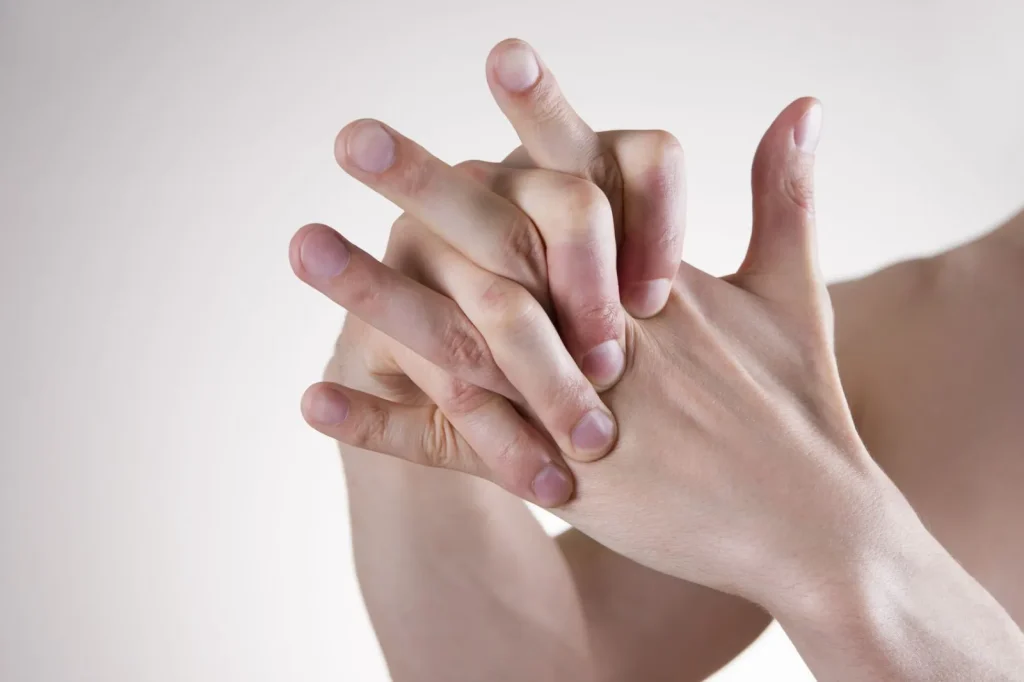
- How to do it: Sit or stand comfortably. Press your palms and fingers together in a “prayer position” in front of your chest, with your elbows slightly out to the sides. Keeping your palms pressed together, slowly lower your hands toward your waist until you feel a gentle stretch in your wrists. Hold for 15-30 seconds.
- Repetitions: 3-5 times.
- Pro Tip: Ensure your fingers are straight and aligned. The pressure should be even across all fingers.
When to Modify, Skip, or Consult Your Doctor: Adapting Your Stretches for RA Flares
While consistency is vital, so is adaptability. During an RA flare-up, your joints are more inflamed, swollen, and vulnerable.
- Reduce Intensity: During a flare, the goal is simply to maintain minimal mobility, not to improve it. Lighten the pressure and reduce the range of motion significantly.
- Decrease Hold Times: Instead of holding for 10 seconds, hold for 2-3, or simply move through the motion without holding at all.
- Skip Certain Exercises: If a particular stretch causes any pain, skip it entirely until the flare subsides.
- Consult Your Healthcare Provider: Always talk to your rheumatologist or physical therapist about the right exercises for you. If you experience a sudden increase in pain, swelling, or joint instability, stop and seek professional advice immediately. This routine is a tool for rheumatoid arthritis relief, not a substitute for medical treatment.
Frequently Asked Questions (FAQs)
Q: How often should I do these gentle morning hand stretches for rheumatoid arthritis?
A: For best results, aim to do them every morning. You can also perform a shortened version during the day if you’ve been inactive or feel stiffness returning.
Q: Can these stretches cure my RA?
A: No. There is currently no cure for RA. However, these stretches are a powerful management tool to reduce symptoms, maintain function, and improve your daily quality of life as part of a comprehensive treatment plan.
Q: Should I stretch both hands even if only one hurts?
A: Yes. It is important to maintain strength and mobility in your unaffected hand and to promote symmetry in your routine. The healthy hand can also serve as a model for the range of motion you are gently working towards on the affected side.
Q: What time of day is best for stretching?
A: While mornings are crucial to combat stiffness, you can stretch any time you feel stiff. Many people find a short, gentle session before bed also helps reduce morning stiffness.
Conclusion: Building a Sustainable Habit for Long-Term Relief
Managing rheumatoid arthritis is a marathon, not a sprint. Incorporating these gentle morning hand stretches for rheumatoid arthritis into your daily routine is a proactive step toward taking control of your symptoms and your day. Remember, patience and consistency are your greatest allies. Celebrate small improvements in mobility and reduced pain. By starting your day with movement, warmth, and mindfulness, you set a positive tone for the hours ahead. For a holistic approach, combine this routine with other strategies like effective wrist stretches, anti-inflammatory nutrition, adequate rest, and, most importantly, the guidance of your medical team.
Start your journey to more manageable mornings today. Choose one or two stretches to begin with, and gradually build your routine. Share your experiences and progress; your story could inspire someone else on their path to finding relief.