Introduction
For individuals with severe rheumatoid arthritis (RA), morning stiffness and joint pain can significantly limit mobility, making even simple tasks challenging. Chair-based morning stretches offer a safe, accessible way to alleviate these symptoms, improve joint flexibility, and enhance daily comfort. This comprehensive guide provides a structured routine of gentle, seated stretches designed specifically for RA patients with severe symptoms. By following these exercises, you can reduce stiffness, boost mobility, and improve your quality of life while prioritizing joint safety.
Key Takeaways
- Chair-based stretches are ideal for severe RA patients with limited mobility.
- Gentle, seated exercises reduce morning stiffness and improve joint function.
- Proper form and safety guidelines protect sensitive joints.
- Adaptable strategies ensure stretches suit varying symptom severity.
- Consistent practice supports long-term joint health and well-being.
For more RA management strategies, explore our Chair-Based Gentle Morning Stretches for Severe RA section.
Why Chair-Based Stretches Are Effective for Severe RA
Severe RA often causes intense joint inflammation, pain, and restricted movement, particularly in the morning after prolonged inactivity. Chair-based stretches are ideal because they minimize physical strain while promoting blood flow, joint lubrication, and flexibility. Performed in a supportive chair, these exercises are safe for those with limited mobility or during flare-ups, allowing you to maintain an active routine without risking injury. This guide outlines a structured, safe approach to seated stretching for RA management.
Essential Chair-Based Stretch Routine
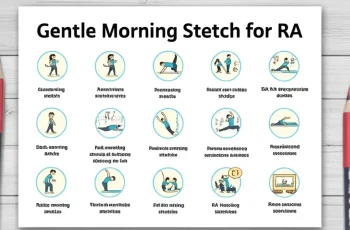
This 15-minute routine includes upper body, arm and hand, neck and shoulder, core and back, leg and ankle, and relaxation stretches. Each section emphasizes proper form and safety to ensure effectiveness and comfort.
1. Upper Body Stretches (3 Minutes)
These stretches target the shoulders and upper arms, common areas of stiffness in RA patients.
Proper Form:
- Shoulder Rolls: Sit in a sturdy chair with good posture, feet flat on the floor. Roll your shoulders forward 5 times, then backward 5 times, keeping movements small and controlled.
- Shoulder Shrugs: Lift both shoulders toward your ears, hold for 5 seconds, then release. Repeat 5 times.
- Arm Extensions: Extend one arm forward, palm up, and gently stretch it forward, holding for 10 seconds. Switch sides and repeat 3 times.
Safety Tips:
- Start slowly to avoid stressing joints.
- Stay within your comfort range, avoiding overextension.
- Maintain proper posture with a straight back.
- Breathe deeply to promote relaxation.
- Stop immediately if you feel pain or discomfort.
2. Arm and Hand Stretches (3 Minutes)
RA often affects the hands and wrists, making these stretches essential for improving dexterity.
Proper Form:
- Wrist Circles: Extend both arms forward at shoulder height. Rotate your wrists gently in small circles for 30 seconds in each direction. Repeat twice.
- Finger Flexion: Open your hands wide, spreading fingers, then gently close into a loose fist. Hold each position for 5 seconds, repeating 5 times.
- Wrist Stretch: Extend one arm, palm down. Use the other hand to gently pull fingers upward, holding for 10 seconds. Switch sides and repeat 3 times.
Safety Tips:
- Move slowly to protect small joints.
- Stay controlled to avoid strain.
- Focus on proper form to maintain alignment.
- Listen to your body and stop if discomfort occurs.
- Progress gradually, increasing repetitions as tolerated.
3. Neck and Shoulder Stretches (3 Minutes)
These stretches relieve tension in the neck and shoulders, areas prone to RA-related stiffness.
Proper Form:
- Neck Rolls: Sit with good posture. Gently tilt your head toward one shoulder, hold for 5 seconds, then roll slowly to the other side. Repeat 3 times per side.
- Neck Stretch: Tilt your head toward one shoulder, keeping the opposite shoulder relaxed. Hold for 10 seconds, then switch sides. Repeat 3 times.
- Shoulder Stretch: Cross one arm over your chest, using the other hand to gently press it closer. Hold for 10 seconds, then switch sides. Repeat twice.
Safety Tips:
- Keep movements gentle to avoid neck strain.
- Don’t force rotation or tilt beyond comfort.
- Stop immediately if you feel pain or dizziness.
- Focus on controlled, smooth motions.
- Breathe deeply to enhance relaxation.
4. Core and Back Stretches (3 Minutes)
These stretches target the upper and mid-back, improving posture and reducing tension.
Proper Form:
- Seated Twists: Sit with good posture, hands on your shoulders. Gently rotate your upper body to the right, holding for 5 seconds. Return to center and repeat on the left. Do 3 repetitions per side.
- Seated Side Stretch: Raise one arm overhead, leaning gently to the opposite side. Hold for 10 seconds, then switch sides. Repeat 3 times.
- Seated Cat-Cow: Place hands on your knees. Arch your back slightly (cow), then round it gently (cat), moving slowly for 30 seconds.
Safety Tips:
- Start with small movements to avoid spinal strain.
- Stay within your comfort range, avoiding overextension.
- Use proper form to maintain alignment.
- Breathe deeply to promote relaxation.
- Stop if you feel pain or discomfort.
5. Leg and Ankle Stretches (2 Minutes)
These stretches improve mobility in the lower extremities, which can be stiff in RA patients.
Proper Form:
- Ankle Pumps: Sit with good posture, feet flat. Point your toes forward, then flex upward, holding each for 5 seconds. Repeat 5 times per foot.
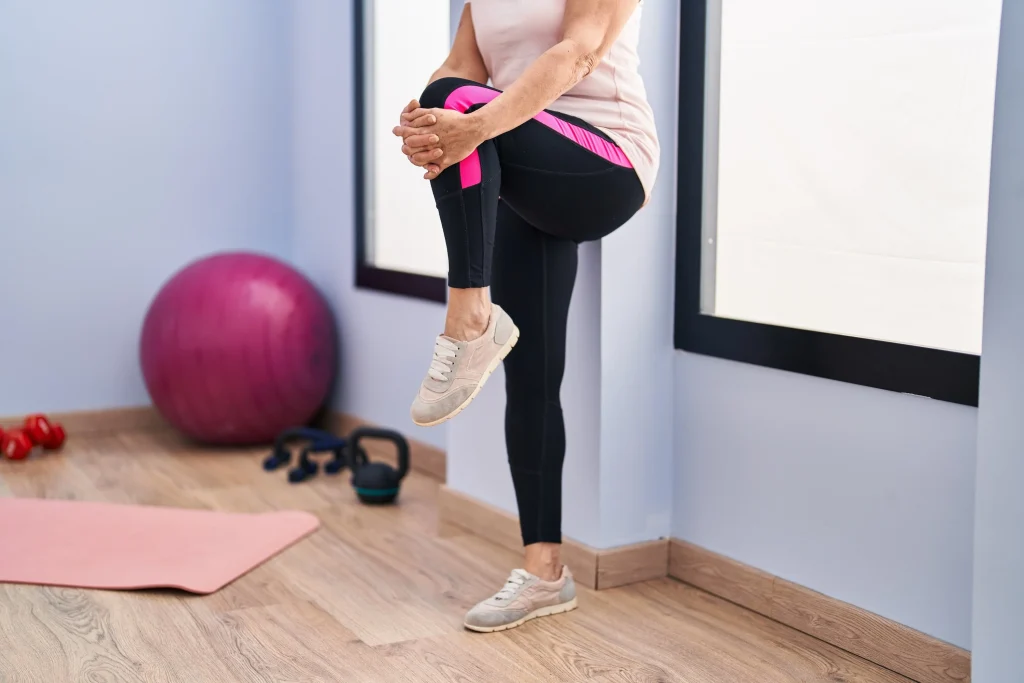
- Knee Lifts: Lift one knee gently toward your chest, then lower slowly. Repeat 5 times per leg, keeping movements controlled.
- Ankle Circles: Lift one foot slightly, making small circles in both directions for 15 seconds. Switch feet and repeat.
Safety Tips:
- Move slowly to protect ankle and knee joints.
- Stay controlled to avoid strain.
- Focus on proper form to maintain alignment.
- Listen to your body and stop if discomfort occurs.
- Use a chair for stability if needed.
6. Full Body Relaxation (1 Minute)
This phase promotes relaxation and eases your body out of the stretching routine.
Proper Form:
- Sit comfortably with hands resting in your lap.
- Take slow, deep breaths for 1 minute, inhaling through your nose and exhaling through your mouth.
- Gently shake out your arms and legs to release tension.
- Relax your shoulders, letting them drop naturally.
- Focus on calming your mind and body.
Safety Tips:
- Stay relaxed and avoid sudden movements.
- Breathe deeply to enhance calming effects.
- Move slowly to maintain comfort.
- Stay present, focusing on your body’s sensations.
- End the routine gently to avoid strain.
Adaptation Strategies
Adapting the routine to your RA symptoms and mobility level ensures safety and effectiveness.
General Modifications
- Reduce Intensity: Use smaller movements during flare-ups or high-pain days.
- Decrease Duration: Shorten the routine to 5–10 minutes if needed.
- Focus on Gentler Movements: Prioritize passive stretches for stiff joints.
- Increase Rest Periods: Take breaks between stretches to avoid fatigue.
- Use Support: Employ a chair, cushion, or strap for stability.
Safety Rules:
- Never force a stretch beyond your comfort zone.
- Stop immediately if you experience pain or swelling.
- Stay within your joint’s natural range of motion.
- Use supportive props if needed for balance.
- Progress slowly to avoid overexertion.
Specific Considerations
Joint Protection:
- Avoid overextension to prevent strain on RA-affected joints.
- Use chair armrests or a cushion for added support.
- Stay within your joint’s safe range of motion.
- Protect weaker joints by limiting their movement.
- Monitor your body’s response to each stretch.
Adaptation Tips:
- Modify stretches by reducing range or intensity during flare-ups.
- Use props like a yoga strap for comfort.
- Take frequent breaks to prevent overexertion.
- Keep stretches comfortable, avoiding strain.
- Adjust based on daily symptoms or energy levels.
Progress Monitoring
What to Track:
- Pain levels before and after stretching.
- Degree and duration of morning stiffness.
- Improvements in joint mobility and flexibility.
- Changes in energy levels and daily function.
- Overall well-being, including mood and sleep quality.
How to Monitor:
- Keep a daily journal to log symptoms and progress.
- Use mobile apps for RA or fitness tracking.
- Take photos or videos to document mobility improvements.
- Note specific improvements, like easier movement or reduced pain.
- Share progress with your healthcare provider for feedback.
Implementation Guide
Integrating chair-based stretches into your daily routine requires planning and consistency.
Getting Started
- Start Slowly: Begin with a 5-minute routine, focusing on one or two stretches.
- Focus on Form: Learn proper technique from a physical therapist or reliable source.
- Build Consistency: Aim for daily practice to establish a habit.
- Track Progress: Note improvements in stiffness or mobility to stay motivated.
- Adjust as Needed: Modify based on daily symptoms or mobility levels.
Building Habits:
- Set reminders (e.g., phone alarms) to prompt your morning routine.
- Pair stretches with an existing habit, like drinking morning coffee.
- Find accountability through a friend or RA support group.
- Celebrate small milestones, like reduced stiffness, to maintain motivation.
- Stay flexible by adapting the routine to your daily needs.
Maintaining Safety
- Set Realistic Goals: Aim for manageable sessions that fit your schedule.
- Track Progress: Monitor how stretches affect your symptoms.
- Stay Motivated: Focus on benefits like improved mobility or comfort.
- Be Patient: Improvements may take weeks, so stay consistent.
- Adjust for Flare-Ups: Reduce intensity or duration during symptom flares.
Overcoming Common Challenges:
- Morning Stiffness: Use a warm compress before stretching to loosen joints.
- Time Constraints: Break the routine into shorter sessions if needed.
- Motivation Issues: Remind yourself of the benefits to daily function.
- Flare-Ups: Switch to passive stretches or rest until symptoms subside.
- Progress Plateaus: Consult a physical therapist to advance your routine.
Frequently Asked Questions
How do I know if I’m stretching safely?
Safe stretching feels comfortable and beneficial. Stop immediately if you experience pain, swelling, or discomfort, and ensure proper form.
What if I feel pain during stretching?
Stop immediately, rest the affected area, and apply ice if swelling occurs. Consult your healthcare provider if pain persists.
Can I modify stretches for my needs?
Yes, adjust duration, intensity, or movements based on your comfort and symptoms. A physical therapist can help customize your routine.
How often should I do these stretches?
Aim for daily practice to maximize benefits, but reduce frequency or intensity during flare-ups. Listen to your body’s signals.
Are there complementary exercises for RA?
Low-impact activities like gentle yoga or swimming can complement this routine. Consult a professional for a tailored plan.
Additional Tips for RA Management
- Use Heat or Cold Therapy: Apply heat before stretching to loosen joints and cold afterward to reduce inflammation.
- Stay Hydrated: Drink water to support joint lubrication and overall health.
- Incorporate Mindfulness: Pair stretches with deep breathing to reduce stress.
- Work with Professionals: Collaborate with a rheumatologist or physical therapist for personalized guidance.
- Maintain a Balanced Diet: An anti-inflammatory diet can enhance the benefits of stretching.
Conclusion
Chair-based morning stretches are a safe, effective way for severe RA patients to reduce stiffness, improve mobility, and enhance quality of life. By following proper form, safety guidelines, and adaptation strategies, you can create a routine that fits your needs. Stay patient, consistent, and attentive to your body’s signals, and consult your healthcare provider for personalized advice. Explore our Seated Morning Stretch Routine and Daily Stretching Schedule for more RA management strategies.
Start your journey to better joint health today! Share your progress or ask questions in the comments below.